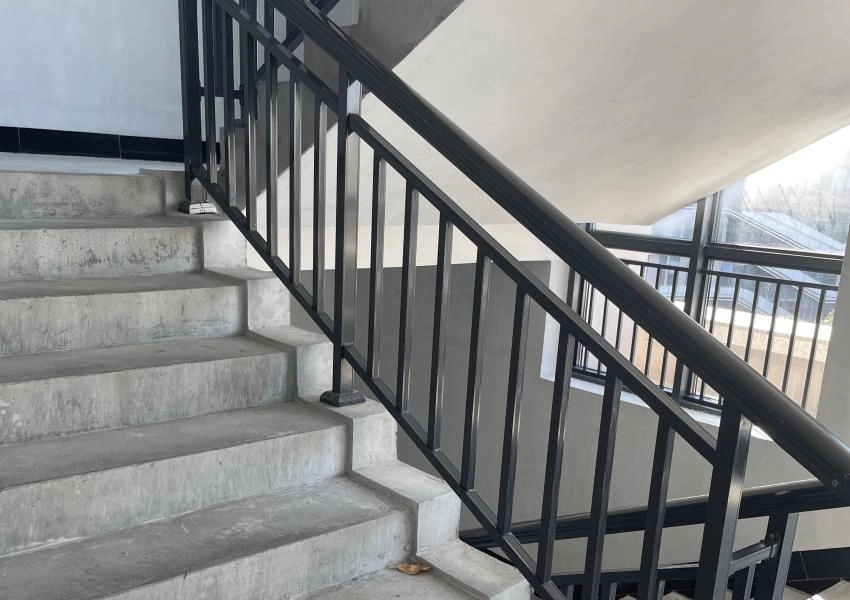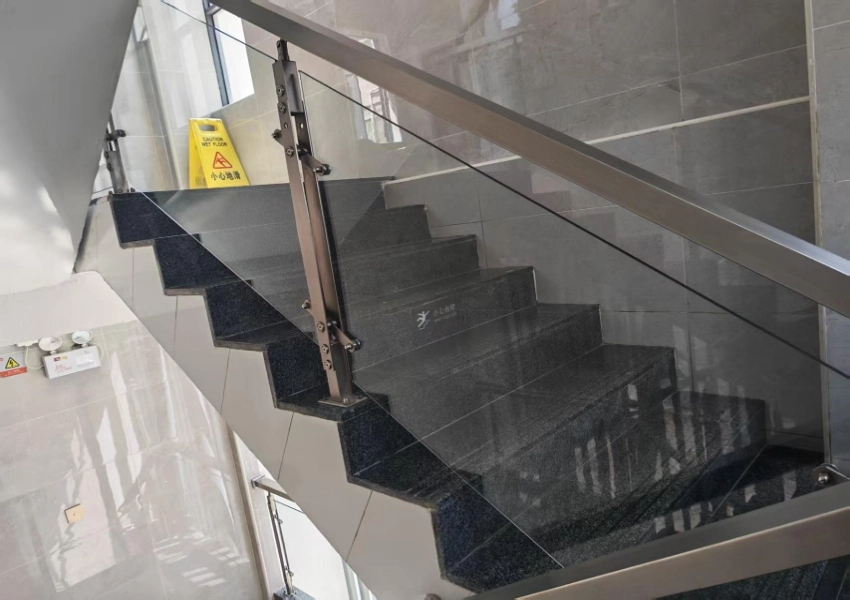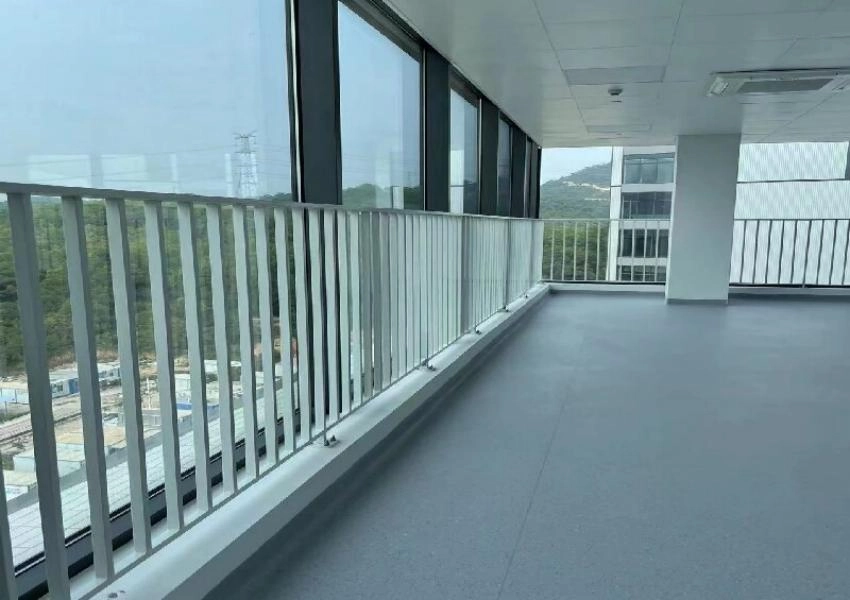
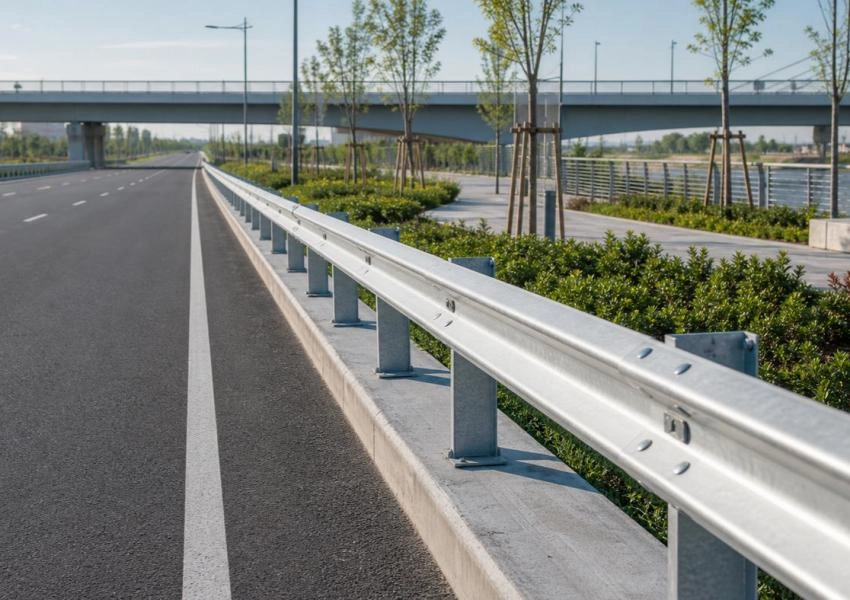
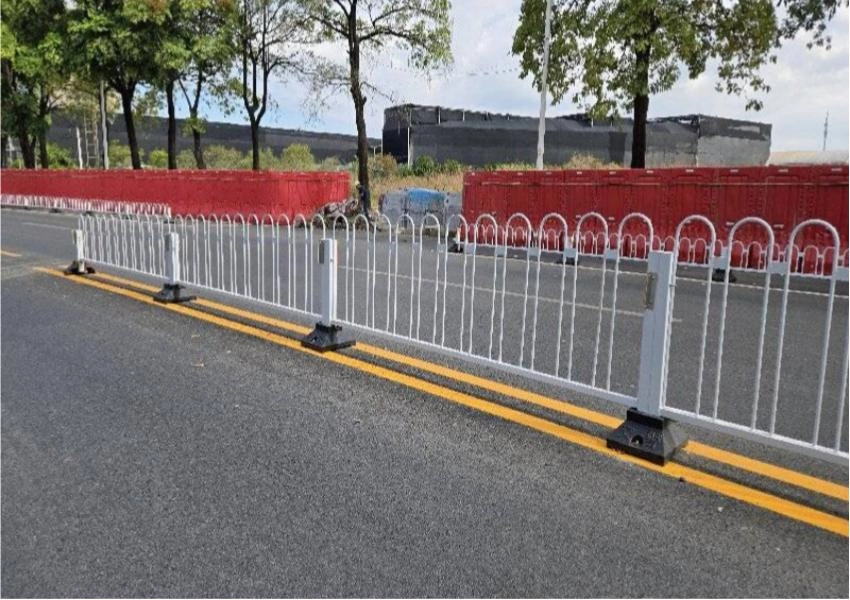

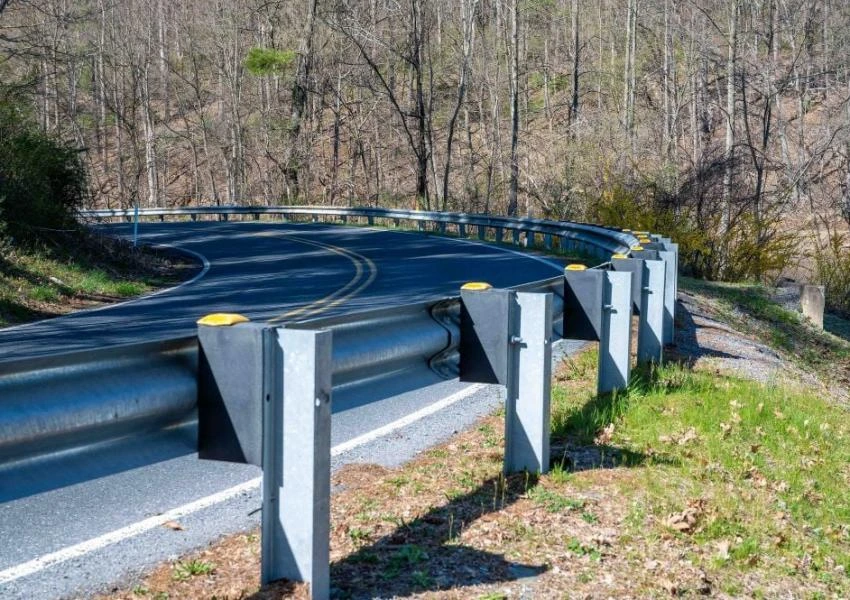
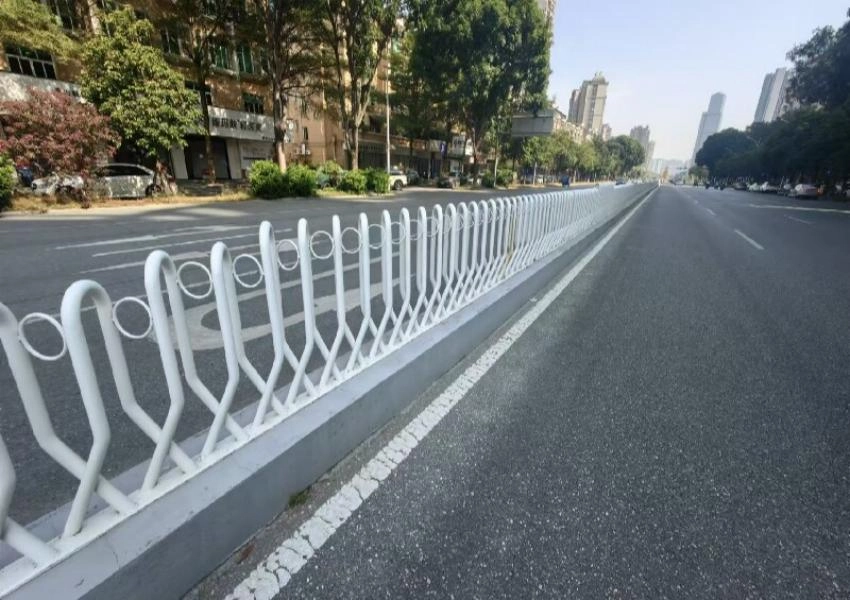
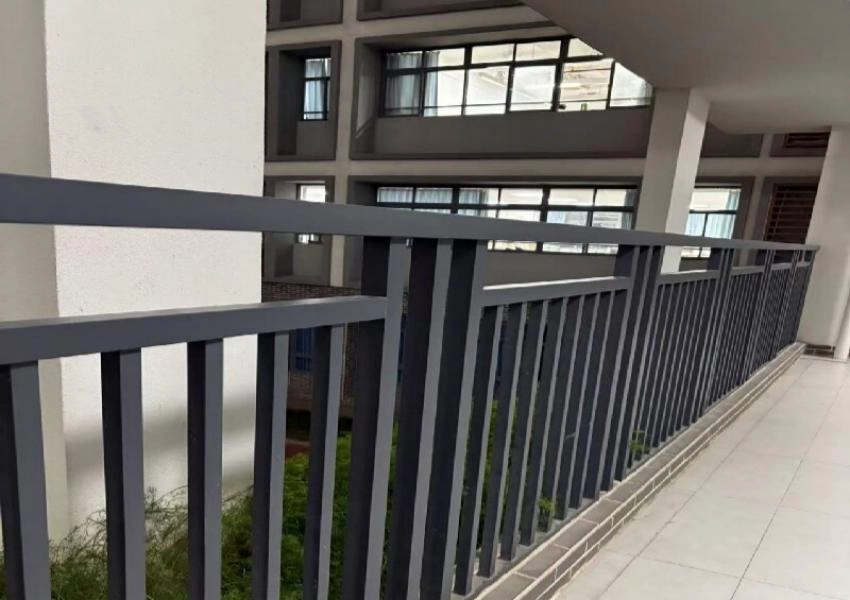
Zinc steel guardrails, also known as wrought iron guardrails, are made of galvanized pipes and coated with paint on the surface.
They have won people’s love for their strong corrosion resistance and beauty. There are generally two types of installation methods for zinc steel guardrails as fence protection: pre embedded installation and tray installation. Pre embedded installation requires advance preparation or the use of direct drilling methods for installation. Regardless of which method is used, cement slurry must be poured into the column to fill the gaps and prevent the guardrail from shaking.
Tray installation is carried out by inserting expansion bolts into flat ground, brick walls, and other surfaces. The key to this installation is to level and maintain a consistent line during installation. There are many application scenarios for zinc steel guardrails, which can be used for municipal road barrier protection, beautification protection, factory barrier, airport barrier enclosure, station personnel diversion, etc. What’s remarkable is that zinc steel guardrails provide an ideal solution for wall protection.
The primary use of zinc steel guardrails is for fence protection, and the main stream in fence guardrails is also for it, so zinc steel guardrails are fence guardrails.
In the 1990s, the walls of residential areas, campuses, factories, etc. were mostly brick walls or concrete walls. Although the walls were reinforced, they took up a lot of space, had poor visual appeal, were time-consuming and difficult to construct, and could not be recycled or reused. These defects gradually emerged with the use of these walls, especially with the change in people’s aesthetics. Diversity and beauty have become increasingly important, and old walls are no longer popular.
In the late 1990s, with the rise of iron fences, wall guardrails emerged. Initially, they were cast iron fences with painted surfaces. However, due to their heavy weight, production, transportation, installation, price, and corrosion resistance, their use gradually decreased and they were later abandoned by users.
Gradually replaced by simple and inexpensive zinc steel guardrails, this type of zinc steel fence guardrail uses two layers of anti-corrosion treatment on the inside and outside, and the color of the exterior can also be freely selected, greatly improving its beauty. It is also very easy to install, directly assembled on site, saving a lot of transportation costs. The ultra-high cost-effectiveness has won the love of a large number of customers.
When sound waves encounter sound barriers during propagation, three phenomena occur: reflection, transmission, and diffraction.
Usually, barriers can prevent the propagation of direct sound and provide sufficient attenuation for transmitted sound, while the impact of transmitted sound can be ignored. Therefore, the sound insulation effect of a sound barrier can generally be expressed in terms of noise reduction, which reflects the two abilities of the sound barrier to shield and transmit sound.
Insert a sound barrier between the sound source and the receiving point, with an infinite length, so that sound waves can only diffract from above the barrier and form a sound shadow zone behind it, just like a shadow formed by an object blocking light. In this sound shadow area, people can feel that the noise has significantly decreased, which is the noise reduction effect of the sound barrier.
The height of the sound barrier is between 1m and 5m, covering an effective area with an average noise reduction of 10-15dB (125Hz-4000Hz, 1/3 octave band), up to 20dB. Generally speaking, the higher or farther away the sound barrier, the better the noise reduction effect.