
 author




- Home
- Blog
- INDUSTRY BLOGS
- Top 3 Reasons to Choose Guardrail Mesh for Highway Safety Projects
Top 3 Reasons to Choose Guardrail Mesh for Highway Safety Projects
-
 author
 - June 8, 2026
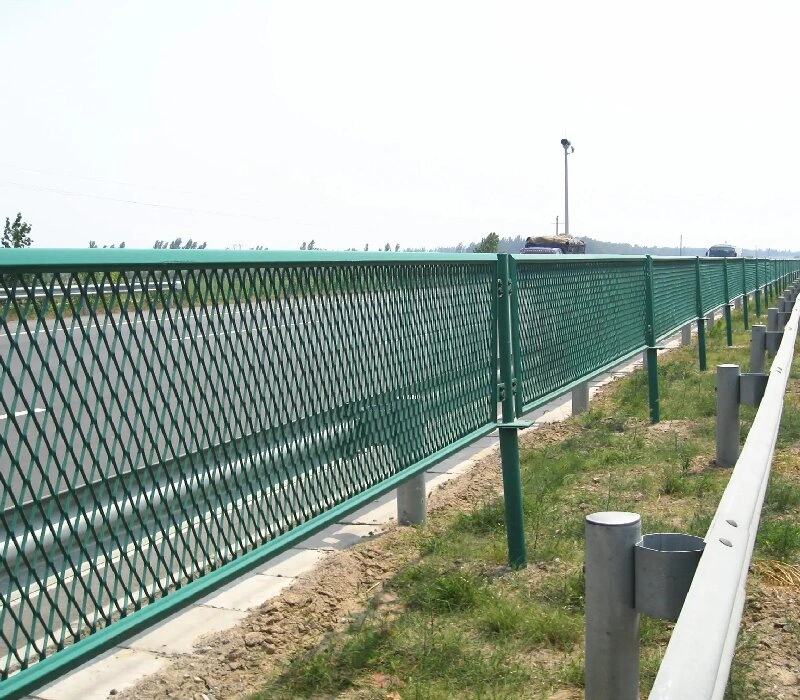
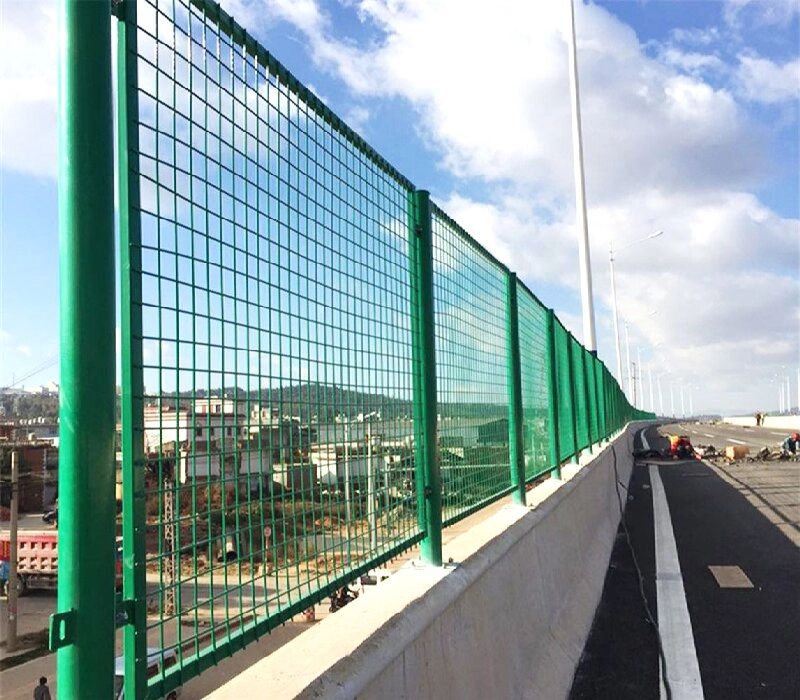 Highway safety systems have moved on from basic rigid barriers to more advanced energy-absorbing designs that blend strength with flexibility. High-speed anti-glare mesh guardrail, also known as steel mesh guardrail or metal anti-glare mesh, acts as an essential active traffic safety element placed in the median strip of highways. The idea behind guardrail mesh centers on building a barrier that stops vehicles from leaving the road while handling crash energy in a smooth way. It pairs mechanical strength with measured flexibility so that any impact leads to predictable and controlled deformation.
These systems rely on galvanized steel and high-tensile alloys because the materials deliver solid durability along with strong corrosion resistance. Bridge guardrails serve as safety protection setups built for both sides of bridges using high-strength substrates such as galvanized steel and stainless steel that get reinforced through welding and anti-corrosion treatment. The same approach carries over to highway guardrail mesh systems, where material quality shapes long-term results.
The Role of Guardrail Mesh in Modern Highway Safety Design
Integration of Guardrail Mesh into Highway Infrastructure
Guardrail mesh goes into place along medians, embankments, bridge approaches, and interchange zones to raise containment capacity. Highway isolation barriers form the main and most common passive protection setup in highway traffic safety facilities. They refer to rigid or semi-rigid guardrails placed in a continuous line along both sides of the main highway and the central median. These barriers link with other safety parts like posts, beams, end terminals, and anti-glare panels to create an unbroken protective network.
Design standards for the installations follow regional rules that set impact performance levels. Products such as the High Speed Isolation Barrier Guardrail show how current engineering blends graded collision protection levels based on road risk factors like design speed or roadside hazard level.
Advantage 1: Enhanced Vehicle Impact Resistance
Energy Absorption and Impact Dynamics
The first benefit comes from its strong capacity to handle vehicle collisions through energy absorption. Its main trait is that high-strength steel wire gets pre-bent into a steady and regular wave shape, often called a sine wave shape, before precision weaving creates a metal protective net that merges high flexibility, integrity, and tensile strength. When an out-of-control vehicle strikes, the structure spreads collision forces over a wider area instead of focusing them at one spot. Controlled deformation lets vehicles slow down step by step, which lowers injury risks for occupants and cuts damage to both the vehicle and the infrastructure.
Reinforced versions, such as those in the high speed dutch fence, boost stability during high-speed crashes by spreading kinetic energy through elastic deformation rather than rigid fracture.
Performance Optimization Through Material Engineering
Material science plays a key role in improving guardrail performance. Advanced coatings lengthen service life under varied environmental conditions by adding extra layers of corrosion protection. Metallurgical treatments raise tensile strength without losing flexibility, which proves vital for steady performance across temperature swings or corrosive settings. Finite element analysis helps engineers forecast deformation behavior under multiple impact scenarios, which supports precise tuning of wire diameter, mesh density, and post spacing.
Advantage 2: Effective Isolation and Traffic Management
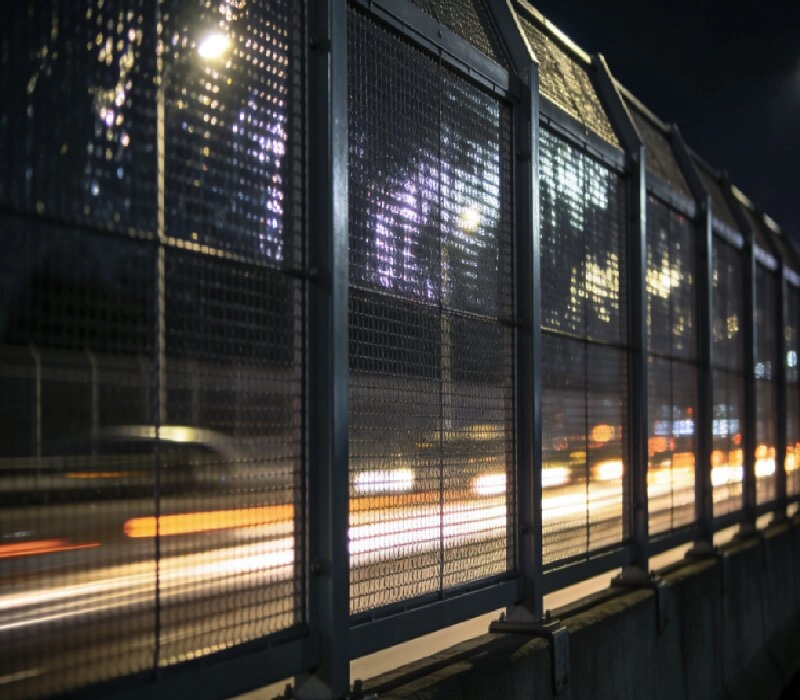
Function of Isolation Guardrails in Roadway Segmentation
Guardrail mesh also delivers an important isolation role within highway networks. Closed isolation nets on both sides of highways serve as a permanent barrier that blocks people and animals from entering and prevents vehicles from crossing. By acting as physical dividers between opposing traffic flows or pedestrian zones, they cut secondary collision risks while keeping clear containment boundaries for errant vehicles. Their alignment along road edges improves visual guidance for drivers, especially at night or in bad weather.
Contribution to Work Zone and Urban Safety Applications
Beyond highways, modular mesh systems work in temporary work zones or urban construction areas where adaptable protection is needed. A workshop isolation fence is a modular and movable safety protection facility built for modern industrial production environments. Similar modularity supports quick installation or repositioning along shifting traffic patterns during maintenance work. Integration with reflective panels lifts nighttime visibility, which remains a critical factor for driver awareness on active construction routes.
For dynamic traffic control scenarios that need anti-glare features along with isolation properties, the High-Speed Anti-Glare Mesh Guardrail offers dual-purpose efficiency by blocking harmful headlight glare while keeping airflow through its perforated structure.
Advantage 3: Long-Term Durability and Maintenance Efficiency
Corrosion Resistance and Environmental Adaptability
Durability is the key to the lifecycle cost-effectiveness of highway safety products. Galvanized or PVC-coated highway collision meshes are resistant to rust. They can work effectively under very harsh exposure to climates, such as spray of salt from coastal areas or freezing. They are strong and flexible enough to follow underground undulation. The surface of such products is usually hot-dip galvanized or PVC/PE coated after galvanizing. Their drainage-friendly design prevents water from gathering up around the posts. This keeps their strength throughout their long life cycle. Also, their performance is not deteriorated by long-time exposure to sunshine with a UV-resistant coating.
Cost Efficiency Through Reduced Maintenance Requirements
Locally damaged sections can be easily replaced by the prefabricated parts as opposed to entire parts of the installation having to be replaced. The cost of such maintenance is further reduced as the whole installation is monitored through the use of predictive maintenance models, which include real-time wear analytics. By scheduling necessary inspections through the model, the operational team can be operating at optimal levels throughout the year, and the potential for unnecessary downtime can be removed. Furthermore, over a long period of time, the structure will result in lower lifecycle costs than a solid concrete barrier, which would require constant restoration over time.
Engineering Considerations for Optimizing Guardrail Mesh Systems
Design Parameters Influencing Performance Outcomes
Engineering optimization starts by balancing geometric parameters, where mesh density sets containment capability, wire diameter shapes tensile response, and post spacing controls load distribution during impacts. Proper anchoring ensures stability under multidirectional loads typical of vehicle collisions at varying angles. Compliance with international crash test standards confirms reliability across all operational scenarios before deployment on public roads.
Future Trends in Guardrail Mesh Development
Looking ahead, innovation centers on sustainability and intelligent monitoring integration. Composite materials that combine lightweight polymers with metallic reinforcements promise reduced weight without losing strength, which aids both installation efficiency and environmental goals. Smart sensors embedded within future isolation guardrails will monitor strain levels in real time to predict fatigue failure before it occurs. Sustainable manufacturing practices aim at minimizing carbon footprints throughout production cycles while maintaining global compliance with transportation safety frameworks.
About BORUI — Our Commitment to Safer Roads Worldwide
At BORUI, we operate from Foshan’s Dali Town with over 20,000 square meters of modern production space equipped with 55 professional machines and more than 200 employees, including R&D specialists dedicated to continuous innovation in metal protective systems. With over 20 years of industry experience, we focus on producing high-quality municipal guardrails, river guardrails, bridge guardrails, zinc-steel guardrails, green guardrails, and guardrail nets. Our products serve industrial parks, municipal projects, expressways, bridges, tunnels, and every context where human life depends on reliable boundary protection.
Our approach integrates full-process service from customized consultation through manufacturing to after-sales solutions, ensuring each client receives tailored safety infrastructure aligned with local regulatory standards. To explore our customization options or request professional consultation services about your next project’s isolation guardrail system design, visit our service page.
Those seeking personalized technical guidance can reach us through our official platform’s contact page, where expert consultants provide detailed recommendations suited to each project’s terrain complexity or environmental exposure profile.
FAQ
Q1: How does guardrail mesh differ from traditional solid barriers?
A1: Unlike solid concrete walls that reflect collision energy abruptly, mesh-based systems absorb impact through elastic deformation, allowing smoother redirection of vehicles back onto lanes while reducing occupant injury risk.
Q2: What maintenance strategies ensure long-term performance?
A2: Periodic inspection combined with predictive maintenance analytics helps identify wear points early; modular replacement designs minimize downtime without dismantling entire sections.
Q3: Can these systems be customized according to site-specific requirements?
A3: Yes—parameters like height, mesh density, coating type, or post spacing can be tailored depending on road category or environmental condition through our dedicated customization services available online.
Recent Posts
-
 Window Guardrail Height and Design Details for Safer BuildingsOctober 12, 2026
 -

-
RELATED PRODUCTS
A tale of a fateful trip that started from this tropic port aboard this tiny ship today stillers
Contact Us
Get personalized guardrails advice for system choice & savings.


