
 author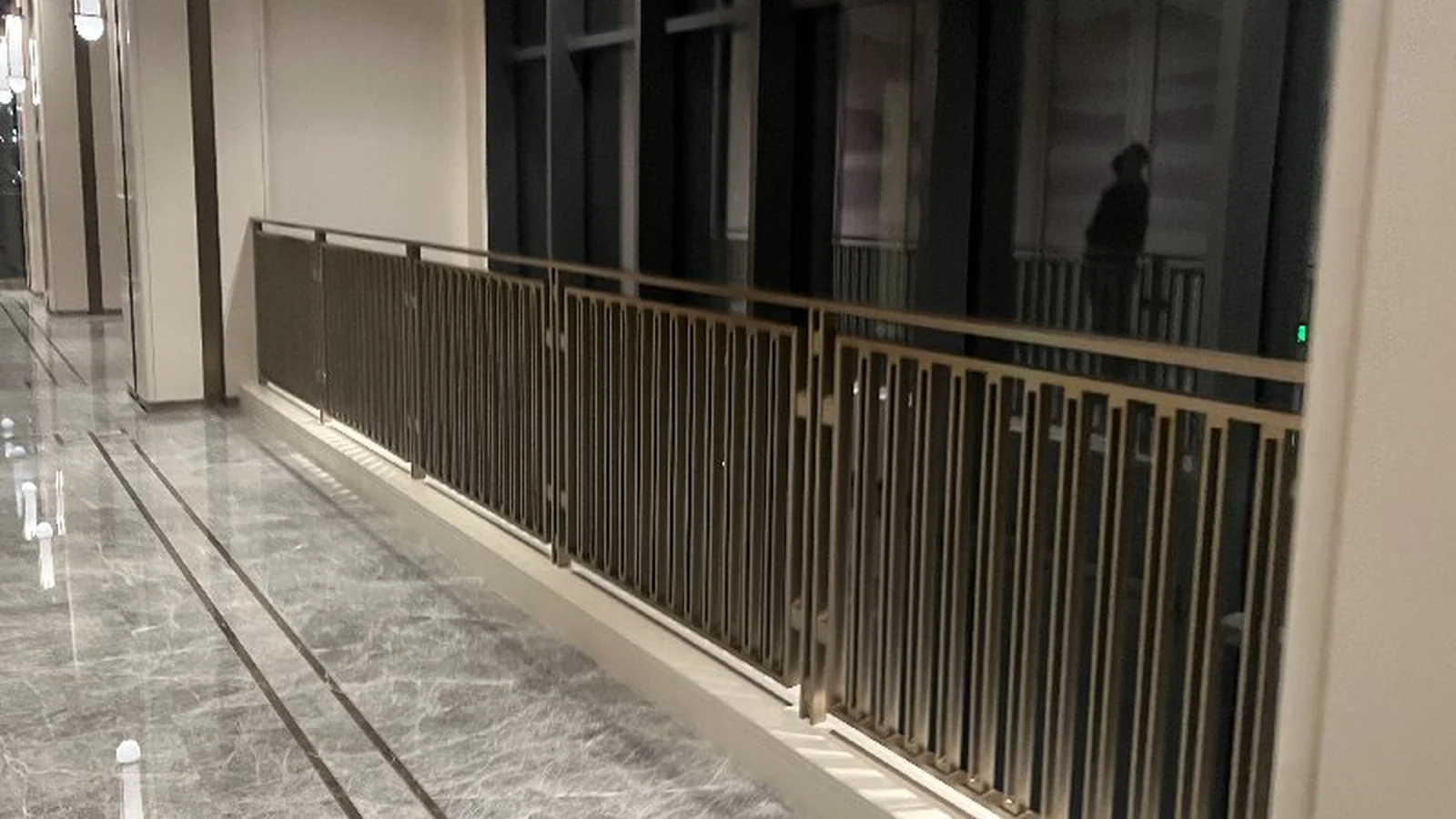



- Home
- Blog
- INDUSTRY BLOGS
- How to Choose the Right Stair Handrail for Commercial Buildings
How to Choose the Right Stair Handrail for Commercial Buildings
-
 author
 - August 24, 2026
Commercial stairs carry carts, staff, guests, children, and maintenance teams while the building is open. A rail that looks acceptable in a drawing can feel wrong if the grip is too wide, the post layout is weak, or the finish shows scratches after one busy season. For building owners, contractors, and distributors, the question is whether the commercial stair handrail can match the building type, meet local safety rules, stay stable, and fit the architectural style. Price matters. But on a public stair, a low quote becomes expensive if the system needs site work, fails inspection, or creates maintenance trouble after handover.
Start With Building Use And Traffic Level
A hotel stair, a school stair, a hospital stair, and a shopping mall stair do not ask the same thing from a handrail. Drawings may use similar lines, but daily load, cleaning routine, user group, and inspection pressure are different. That is why a stair handrail system should be selected after the team is clear about who will use the stair and how hard the rail will be worked on.
Match The User Group To The Flight
Commercial environments like shopping malls, airports, and stations require additional support for the handrail due to high volumes of people using the stairs in groups, with luggage, or even holding onto their phones. Wayfinding signs will also be placed along the handrail. Other commercial environments, such as hospitals and nursing homes, will require handrails on both sides of the stairs. Additionally, the surface of the handrail will require easy cleaning. Schools, on the other hand, require anti-climb details on the handrail, smooth corners, and tight vertical spacing between balusters. This is where a commercial stair handrail comes into play and can be a minor but important component of the building. A good quality stair handrail will blend into the background of the building and be a solid, firm handrail that does not cause any annoyance as people go up and down the stairs. A stair handrail that shakes, catches on clothes, or is too large to hold comfortably in the hand will cause instant complaints.
Check Height, Grip, Spacing, And Anti-Climb Risk
Local codes and project specifications always come first, but buyers should still know the practical numbers before comparing quotations. A supplier that cannot discuss height, grip, infill spacing, and extensions clearly may struggle when the project reaches shop drawings and inspection.
Keep The Handrail Continuous
A good safety handrail is continuous along the stair flight and landing. The rail should extend horizontally at least 300 mm at the start and end, so users do not lose support at the first or last step. BORUI staircase guardrail also uses 900 mm as a public building handrail height reference, with auxiliary child handrails around 600-700 mm where younger users are a main concern.
Grip size deserves the same attention. Round handrails with a diameter of about 35-50 mm, or elliptical sections around 40 x 60 mm, are easier to hold than bulky decorative shapes. A beautiful section that cannot be gripped well is not a good safety detail.
Treat Infill Gaps As A Safety Detail
Spacing is not just a visual decision. BORUI’s stair railing parameters use column spacing up to 1100 mm to support each span, while vertical gaps are generally controlled at 110 mm or less to reduce the risk of a child’s head getting trapped. For schools, a tighter vertical pole spacing of 90 mm or less is a better fit, together with smooth corners and no hook-like protrusions.
Anti-climb design also matters. Vertical bars or grilles are usually safer than layouts with many horizontal members in places used by children. When a stair has an open side, the handrail gives grip, while the guard prevents falling. Mixing those two jobs into one vague “rail” is where many errors begin.
Choose Materials For Wear, Cleaning, And Visual Fit
Material choice is not only about style. It affects corrosion resistance, cleaning effort, repair method, and how the stair feels after years of public use. A public stair in a dry office lobby can use a different finish from a rail near an outdoor entrance, coastal building, school, or hospital corridor.
Metals For Busy Interior Flights
Metal remains the safest starting point for many commercial projects. 304 stainless steel with a wall thickness of 1.5 mm or above gives a clean, durable option for interior stairs and damp public areas. 6063-T5 aluminum alloy is lighter and works well for slim profiles and color finishes. Hot-dip galvanized steel is often chosen where strength, budget, and corrosion resistance need to stay balanced.
Surface treatment should be matched to the building. Brushed or mirror-polished stainless steel suits modern interiors. Powder coating gives strong color control. Fluorocarbon coating, with film thickness often set at 40 microns or above in BORUI railing references, suits projects that need better exterior resistance. The finish decides how the rail looks after cleaning chemicals, hand oils, sun exposure, and daily knocks.
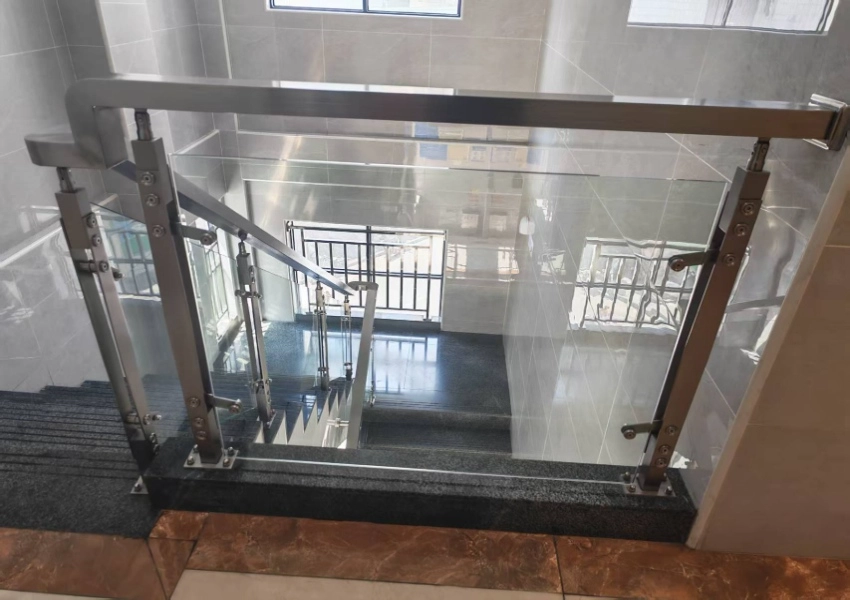
Glass, Wood, And Composite Options
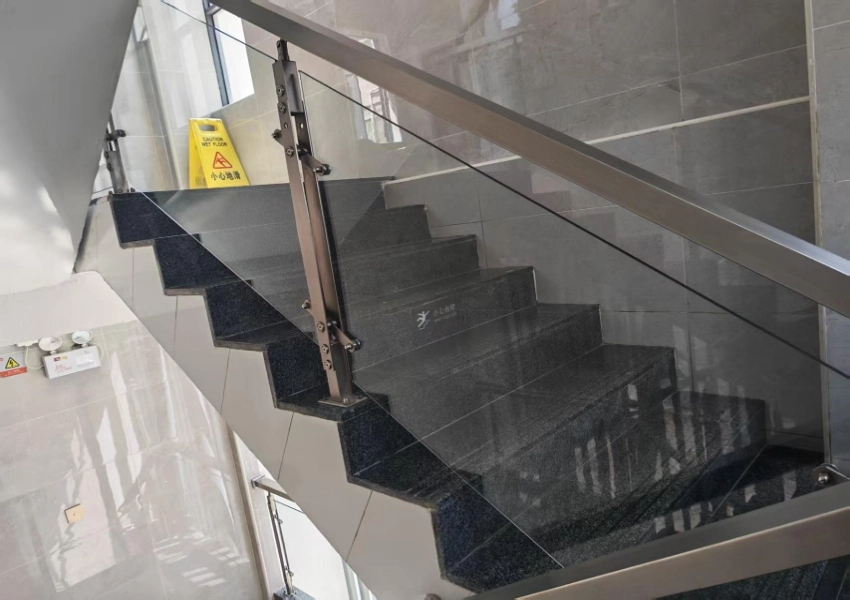
Stairwell glass is used in a wide range of hotel, office, atrium, gallery, and shopping center environments. It can be supplied as tempered laminated glass to give maximum transparency while keeping the stair visually light. The 12 mm laminated glass or 8+8 mm wired glass options are available. Edge finish, anti-fingerprint treatment, and fixing method are to be agreed upon at an early stage, as poor detailing shows up quickly on glass railings as opposed to solid metal railings. Wooden handrails provide a warm feel for hotels, boutique hotels, cultural spaces, or high-end mixed-use projects. Hardwood handrails require controlled moisture content and are typically specified at 8-12% moisture content. This helps that the handrail does not warp or crack. Steel-wood handrail combinations and glass-metal staircases are also popular. However, it is essential to agree on replacement parts prior to order confirmation.
Look At Fixing Details Before Prices
Many quotation comparisons focus on visible rails and panels. The bigger risk often sits lower, where the post meets the step or landing. Good material can still perform badly if the base plate, anchors, and site tolerance are weak.
Anchors Carry The Real Risk
BORUI stair railing references use chemical anchor bolts or through bolts for fixing columns to the ground or steps, with pull-out resistance of at least 3 kN. The system can also be designed to withstand a horizontal concentrated load of 1.5 kN/m without permanent deformation. These numbers help buyers question a quote: What anchor type is included? What base plate thickness is assumed?
For buildings in areas with seismic concern, flexible connections or elastic gaskets at key points can reduce stress concentration. This affects how the stair handrail system behaves after vibration, small movement, or years of repeated impact.
Modular Details Save Maintenance Time
Commercial buildings do not like long shutdowns. Modular components, concealed connection points, and local replacement options can save time when a section is damaged. Rounded corners and polished welds reduce injury risk and make cleaning easier. A handrail manufacturer that can discuss these details before production is usually easier to work with when the project changes on site.
Good procurement questions are simple: Can damaged parts be replaced without removing the entire flight? Are fixing bolts accessible? Can color and finish be repeated in later batches?
Where BORUI Handrail Systems Fit Commercial Projects
BORUI Metal Technology staircase guardrail products can be widely applied to metal railings for stairs, balconies, windows, and public edge protection in various materials such as stainless steel, aluminum alloy, hot-dip galvanized steel, glass, wood, and composite structures for different applications and with various heights, spacings, colors, patterns, and fixing details to meet the special requirements for different projects. In a big building, there may be need for several types of balcony window staircase guardrail, i.e., related products for different parts of a building, and it is recommended to have a look at the related products under the category of balcony window staircase guardrail to have a better understanding of the various styles and the corresponding specifications. For commercial projects, it is suggested to select a supplier that can provide BORUI guardrail design, sampling, production, logistics, and after-sales service in a comprehensive manner, instead of treating them as individual problems. For projects that require brighter stairwells or atriums, stainless steel glass guardrail systems can be used, especially for visible areas that require modern and stylish appearances. If you are looking BORUI, you can contact us for support such as drawings, material confirmation, surface treatment selection, and repeatable batch production. For sample orders, customized dimensions, and special packaging requirements before tendering, actual installation, etc. You can request for custom project support with the relevant drawings and quantities.
FAQ
Q1: What is the most important detail when choosing a stair handrail for a commercial building?
A1: Start with user group, local code, and fixing method. Height and material matter, but weak anchors, poor grip size, or wide infill gaps can create bigger long-term risks than the visible finish.
Q2: Is glass suitable for a safety handrail system in public stairs?
A2: Yes, if the glass type, edge finish, frame, clamps, and fixing method are designed for the project. Tempered laminated glass with stainless steel or aluminum support is often used in hotels, offices, galleries, and shopping centers.
Q3: What should buyers ask a handrail manufacturer before placing an order?
A3: Ask for material grades, wall thickness, finish method, height and spacing options, anchor design, sample process, packing method, and replacement part support. These details make the quote much easier to compare.
Recent Posts
-
 Window Guardrail Height and Design Details for Safer BuildingsOctober 12, 2026
 -

-
RELATED PRODUCTS
A tale of a fateful trip that started from this tropic port aboard this tiny ship today stillers
Contact Us
Get personalized guardrails advice for system choice & savings.


