
 author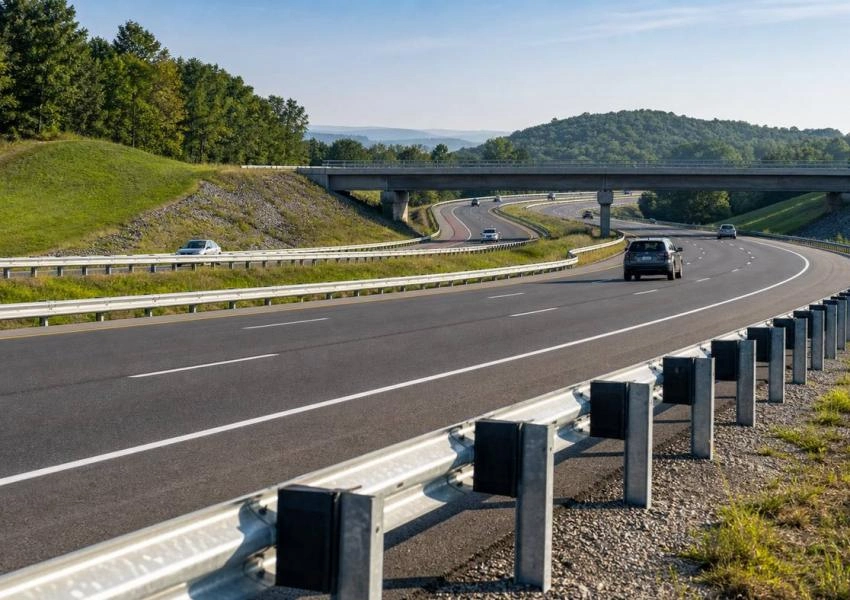



- Home
- Blog
- INDUSTRY BLOGS
- Stop Buying Guardrails by the Pound: How to Procure Complete Safety Systems
Stop Buying Guardrails by the Pound: How to Procure Complete Safety Systems
-
 author
 - July 27, 2026
Road projects are harder to price and harder to defend when something goes wrong. Traffic is heavier, roadside space is tight, and many older routes were not built for today’s vehicle mix. After a serious guardrail crash, buyers may be asked why a certain rail, post, terminal, or coating was accepted. A road guardrail is not simply steel listed on a bill of quantities. It is part of a working safety system, and every part has to suit the road in front of it.
Why Does a Road Guardrail Matter So Much?
The main question is not what a guardrail looks like. It is what the barrier must do at a particular site, given the speed, terrain, traffic type, and hazard behind it.
It Gives an Out-of-Control Vehicle a Safer Path
A vehicle leaving the lane may be heading toward a bridge edge, a steep drop, deep water, a concrete structure, or oncoming traffic. A road guardrail is placed where hitting the barrier is likely to be less severe than hitting that hazard. During a guardrail crash, the rail should catch the vehicle and guide it along the roadside instead of stopping it in one sharp hit. Some movement is expected. That movement spreads force across the rail, posts, bolts, blockouts, and ground around the posts.
This is why a stiffer barrier is not always better. If the system cannot move as designed, impact forces may rise. If it moves too far, the vehicle may still reach the hazard. A highway guardrail needs working room, a sensible lane offset, and a clear area behind the rail. A traffic barrier also marks lanes before any crash. The required job should be stated clearly: vehicle containment, pedestrian control, or lane guidance.
What Decides Performance in a Guardrail Crash?
Crash behavior comes from the complete assembly. Looking only at the steel rail misses the details that often decide whether the system performs properly on site.
Every Component Changes How the Barrier Responds
The familiar W-beam guardrail uses a corrugated profile because it carries force along the rail while allowing controlled bending. When a vehicle makes contact, several posts may rotate or move in the soil. Bolts and splices pass the load into the next section. Blockouts keep the rail in a useful position against the vehicle body. None of these parts works alone.
Small changes matter during a guardrail crash. A different post, thinner steel, or altered splice may change the load path. Parts should not be mixed simply because the holes line up.
Terminals deserve the same attention. An exposed rail end is a hazard, so it must match the road layout and barrier. Transitions matter where a flexible highway guardrail meets a bridge rail or concrete parapet. Guardrail installation height, post depth, offset, alignment, and ground condition all affect the result. Concrete around every post may look stronger, but it can stop the expected movement. Curbs, drains, and nearby foundations cause similar trouble. Good drawings show terminals, transitions, connections, and the space available for deflection.
Which Road Safety Barrier Fits the Site?
Urban streets, high-speed roads, bridges, tunnels, and temporary work zones do not ask the same thing from a barrier. One familiar design should not be forced into every location.
City Roads and Highways Need Different Answers
Urban roads often need clear separation in a limited space. The traffic guardrail range can serve medians, pedestrian boundaries, intersections, bus lanes, ramps, and temporary diversions. Modular sections are practical when one damaged panel needs replacement. Keeping a few matching panels and fittings in reserve can also shorten repairs on busy streets where long closures are not realistic.
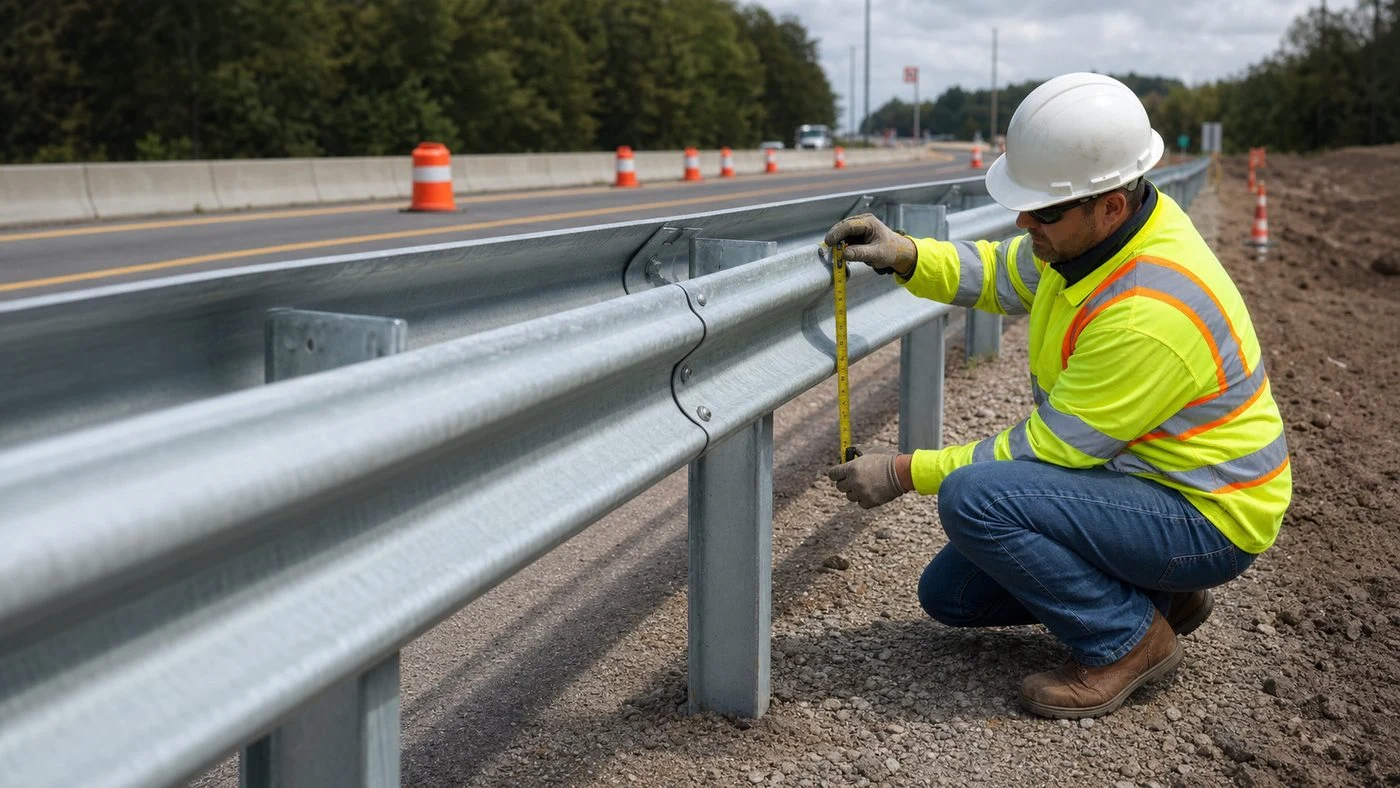
High-speed roads call for closer attention to containment, deflection, terminals, and bridge transitions. A galvanized W-beam guardrail remains common because damaged sections can be replaced and the rail balances strength with movement. On coastal roads, winter routes, and tunnels, coating quality and drainage matter too.
The choice begins with the site. A light traffic barrier used for visual separation is not automatically a crash-rated road safety barrier. Speed, vehicle mix, shoulder width, slope, and hazard distance should be checked first. The wider road guardrail product range covers roads, bridges, medians, and related protection areas.
What Should Buyers Check Before Ordering?
Vague descriptions create cheap quotes, followed by expensive questions. A useful inquiry gives each guardrail manufacturer the same practical information.
The Specification Should Cover More Than Rail Weight
The order should name the rail profile, steel grade, plate thickness, post type, post spacing, blockout, fasteners, terminals, transitions, coating, and inspection records. For a W-beam guardrail, the hole pattern and splice position should be clear as well. Route drawings, quantities by section, curves, elevation changes, and unusual foundations belong in the inquiry, not in a later email after production starts.
Documents help only when they match the supplied traffic barrier. Material certificates, coating reports, dimensional records, packing lists, and batch labels give site teams something concrete to check. Crash-testing claims should refer to the offered system, not a different post or terminal arrangement.
Packing deserves attention too. Rails, posts, bolts, and transition pieces need clear labels and should follow the guardrail installation sequence. After a guardrail crash, compatible repair parts must still be available. A good guardrail manufacturer will flag missing details and keep a clear bill of materials. That can stop one missing box of brackets from delaying a road closure.
Why Consider BORUI as a Guardrail Manufacturer?
BORUI operates a 20,000-square-meter production base with 55 professional machines and more than 200 employees, including over 20 research and development staff. Its range covers road, bridge, river, municipal, zinc-steel, and mesh guardrails. Services include drawing review, sampling, production, delivery, and after-sales support.
More than 10,000 customers have worked with the factory. That experience is useful when an order includes custom lengths, several post types, special colors, export packing, or staged shipments. Samples and production details can be reviewed before the full run begins, which makes approval less rushed. A clear component list then follows the order from drawing to packing.
For contractors and distributors, this cuts down a familiar site problem: rails arrive, but a small group of bolts, brackets, or transition pieces does not. It also makes later repairs easier because the supplied road safety barrier has traceable parts. Product questions, drawing requests, or replacement needs can be sent through the contact page without placing direct contact details inside the article.
Conclusion
A road guardrail earns its place when the hazard behind it is worse than the likely impact with the barrier. The decision should cover the whole system, not rail weight alone. Posts, terminals, transitions, foundations, coating, and guardrail installation details all shape the result of a guardrail crash. Buyers who describe the site clearly and compare complete packages are less likely to face missing parts or costly changes during installation. A reliable guardrail manufacturer should make the job simpler with matching components, clear records, sensible packing, and repair support after delivery.
FAQ
Q1: What is the main job of a road guardrail?
A1: It shields road users from a more severe roadside hazard and helps redirect a vehicle during impact. It may also separate lanes or protect pedestrians, but those functions should be stated in the specification.
Q2: Is a W-beam guardrail suitable for every road?
A2: No. It is widely used, but the right road safety barrier still depends on speed, vehicle mix, shoulder space, hazard position, required containment, and local standards. Terminals and transitions must match the chosen system.
Q3: What should be checked after a guardrail crash?
A3: Inspection should cover bent rails, shifted posts, damaged blockouts, loose bolts, anchors, terminals, transitions, foundations, height, and alignment. Repair parts should match the approved highway guardrail system before the road returns to normal use.
Recent Posts
-
 Window Guardrail Height and Design Details for Safer BuildingsOctober 12, 2026
 -

-
RELATED PRODUCTS
A tale of a fateful trip that started from this tropic port aboard this tiny ship today stillers
Contact Us
Get personalized guardrails advice for system choice & savings.


