
 author




- Home
- Blog
- INDUSTRY BLOGS
- Why Are High Guardrail Systems Critical for Highway Safety
Why Are High Guardrail Systems Critical for Highway Safety
-
 author
 - July 6, 2026
High guardrail systems are integral to modern highway infrastructure. They serve as both physical safety boundaries, ensuring that vehicles remain within the roadway even under extreme conditions. These systems are not merely structural elements but engineered safety mechanisms that combine material science, impact dynamics, and human-centered design to reduce accident severity and maintain continuous traffic flow.
What Is the Purpose of Traffic Guardrails in Highway Design?
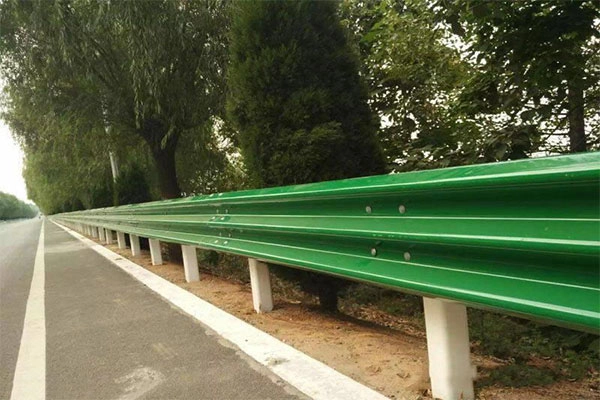
Traffic guardrails perform several critical functions that directly contribute to overall highway safety. Highway guardrails are the most crucial and widely used passive safety system in highway traffic safety facilities. They refer to rigid or semi-rigid guardrails continuously installed along both sides of the highway mainline and the central median. Their primary role is to absorb collision energy through deformation and redirect errant vehicles back onto the road in a controlled manner, preventing run-off-road incidents or cross-median collisions.
By guiding vehicles smoothly along their surface during impact, properly designed systems mitigate crash severity and prevent secondary accidents such as rollovers or head-on collisions. Their core function is to absorb collision energy through deformation, forcing out-of-control vehicles to change direction and effectively preventing vehicles from crossing the boundary (running off the road or crossing the central median), thereby reducing the severity of accidents and ensuring the safety of drivers and passengers.
Our own high-speed isolation barrier guardrail exemplifies this principle by employing corrugated steel beams that deform predictably under impact while maintaining sufficient strength for redirection.
How Do Guardrails Reduce Crash Severity?
Guardrails are engineered with energy absorption mechanisms that dissipate kinetic energy during a collision. Taking mainstream corrugated beam steel guardrails as an example, the core components (corrugated steel plates, posts, and anti-collision blocks/supports) constitute a precise energy management system—in the event of a vehicle collision, the corrugated beam absorbs energy through deformation, the posts dissipate energy through bending or breakage, and the anti-collision blocks prevent wheel obstruction and assist in guidance. This tiered protection approach minimizes rollover risks by allowing controlled deflection rather than abrupt stops.
Strategic placement further enhances effectiveness—guardrails positioned near steep slopes or fixed roadside objects act as buffers that reduce the risk of severe run-off-road consequences. Our high speed dutch fence integrates flexible woven steel mesh technology that disperses impact loads across a wide area while maintaining high tensile strength, suitable for slope protection or bridge applications where adaptability is key.
Core Design Principles of High Guardrail Systems
What Structural Factors Define Effective Guardrail Performance?
The choice of building materials greatly affects the mechanical characteristics of a guardrail. Until now, corrugated steel has been the most preferred material because it has a good balance between rigidity and controllable deformation. Hybrid composites are also being investigated for improved corrosion resistance. A popular guardrail made of corrugated steel is globally used because of its excellent protective function, moderate price, and esthetic look. Geometry—specifically cross-section shape—determines how forces propagate during impacts, influencing vehicle containment capability.
Durability also depends on corrosion-resistant coatings such as hot-dip galvanizing combined with electrostatic spraying or polymer layers to withstand de-icing agents and salt spray exposure over the years of operation.
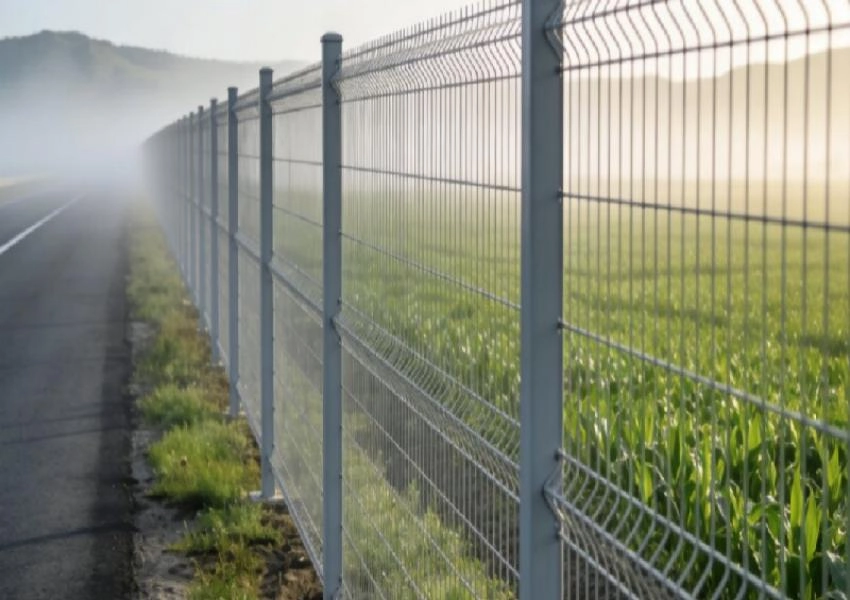
Why Are Height, Deflection, and Post Spacing So Critical?
Guardrail height determines which vehicle types can be safely contained without over- or under-ride failures. Controlled deflection zones allow gradual deceleration rather than abrupt stops; too much deflection risks secondary hazards, while too little increases occupant injury forces. Optimizing post spacing ensures structural continuity—balancing economic efficiency with consistent crash performance across varying terrain conditions.
How Do End Terminals and Transitions Enhance Safety?
End terminals are designed as sacrificial structures that absorb initial impact energy progressively before it reaches the main rail segments. Transitions between barrier types—such as from flexible cable systems to rigid concrete walls—must be carefully engineered for stiffness compatibility to prevent detachment during high-energy events. Proper anchorage at these interfaces ensures stability even when subjected to oblique collisions at elevated speeds.
Impact Dynamics and Crash Performance Evaluation
How Does Vehicle–Guardrail Interaction Influence Crash Outcomes?
Vehicle mass distribution affects how rails bend or buckle; asymmetric loads can lead to localized failures if not accounted for during testing simulations. Advanced dynamic modeling tools allow engineers to replicate these complex interactions virtually before full-scale validation tests are conducted on prototypes like our high-speed anti-glare mesh guardrail, which combines glare reduction with robust containment capabilities in median applications.
Which Standards Govern Guardrail Testing?
Compliance with internationally recognized standards such as MASH (Manual for Assessing Safety Hardware) or EN 1317 ensures reliability across diverse road environments. Full-scale crash testing validates theoretical assumptions about material behavior and connection strength under real-world conditions. Mechanical and protective performance must be verified through full-scale collision tests on real vehicles. Data derived from these evaluations inform iterative design improvements—enhancing both occupant protection levels and lifecycle economy for highway authorities worldwide.
Integration of High Guardrail Systems into Roadway Design Strategy
A high guardrail system’s effectiveness depends not only on its inherent design but also on how it integrates into broader roadway geometry and environmental contexts such as curvature, slope gradient, soil type, or drainage layout.
How Should Placement Vary Based on Road Geometry?
Placement decisions derive from risk assessment models considering embankment height, curve radius, proximity to obstacles, or potential fall zones near bridges or waterways. Roadside guardrails are installed at the edge of the highway subgrade; suitable scenarios include embankments exceeding 3 meters or bridge approach sections. Median barriers require continuous installation on two-way highways where opposing traffic flows present direct head-on risks; here, our isolation barrier solutions provide modular flexibility while maintaining visual openness for drivers’ peripheral awareness—a factor especially valuable on curved alignments or elevated viaducts exposed to crosswinds.
How Do Guardrails Coordinate with Other Road Safety Elements?
Guardrails are part of a comprehensive system of structures, which function synergistically with signposting systems, road lighting, drainage, and intelligent transportation systems for the monitoring of impact-related damage and of damage caused by weather. The integration of smart detection modules into selected sections of the guardrail, which can register and transmit degrees of deformation, enables predictive maintenance, which reduces the amount of time that is required for repair and extends the useful life of guardrails on national expressways.
About BORUI
As an expert dedicated to advanced roadway protection technologies, BORUI specializes in designing comprehensive solutions tailored for diverse infrastructure contexts—from municipal roads to expressways bridging complex terrain. BORUI Metal Technology (Guangdong) Co., Ltd. is based in Dali Town, Foshan, Guangdong Province. We specialize in producing high-quality municipal guardrails, river guardrails, and bridge guardrails. We can provide you with a full service from design to after-sales service. We have a production base covering 20,000 square meters with 20,000 square meters of workshops, 55 sets of precise machine tools, over 200 skilled workers, and 20 R&D staff members. Our products can meet the global standards of MASH and EN1317.
We invite engineers seeking optimized high guardrail configurations for upcoming projects to reach out via our contact page, where our consultants provide scenario-specific recommendations supported by free technical assessments.
FAQ
Q1: What distinguishes high guardrail systems from conventional roadside barriers?
A1: High guardrails incorporate graded collision protection levels configured according to section risk factors such as design speed or roadside hazard intensity; they employ scientifically reliable structures combining corrugated beams with energy-dissipating posts, ensuring superior containment efficiency.
Q2: How do anti-glare mesh designs enhance nighttime driving safety?
A2: The anti-glare mesh structure scatters headlights passing through it, thereby reducing direct glare intensity impacting drivers’ eyes while maintaining transparent visibility across medians.
Q3: Why is modularity important in modern highway isolation barriers?
A3: Modular construction allows quick replacement of damaged segments without large-scale refurbishment, lowering lifecycle costs significantly; this principle underpins our high-speed isolation barrier guardrail design philosophy, prioritizing maintainability alongside robust crash resilience.
Recent Posts
-
 Window Guardrail Height and Design Details for Safer BuildingsOctober 12, 2026
 -

-
RELATED PRODUCTS
A tale of a fateful trip that started from this tropic port aboard this tiny ship today stillers
Contact Us
Get personalized guardrails advice for system choice & savings.


